How technology is quietly transforming the orthodontic experience for busy families in Gilbert, AZ
Most parents assume orthodontic treatment means a year or two of monthly appointments, adjustments, and missed school mornings. You budget the time. You rearrange your schedule. You pull your kid out of class, again, for another 20-minute check-in that feels like it could have been a text message.
But a new generation of digital tools is changing that equation entirely — and families who know about it are choosing very differently.
The Old Way: Appointment After Appointment
Traditional orthodontics was built around a simple limitation: the orthodontist couldn't see your teeth unless you were physically in the chair. Every adjustment was a guess refined over time. Brackets were mass-produced to fit a generic arch shape. Wires were bent by hand. And the only way to check progress was to schedule another visit.
The result? Most traditional orthodontic patients come in every 4 to 6 weeks for the duration of their treatment — sometimes 18 to 24 months. That's 18 to 36 appointments, each requiring travel, waiting room time, and a disruption to the school or work day.
For a two-parent household with two kids in braces? You do the math.
What Changes When You Go Digital
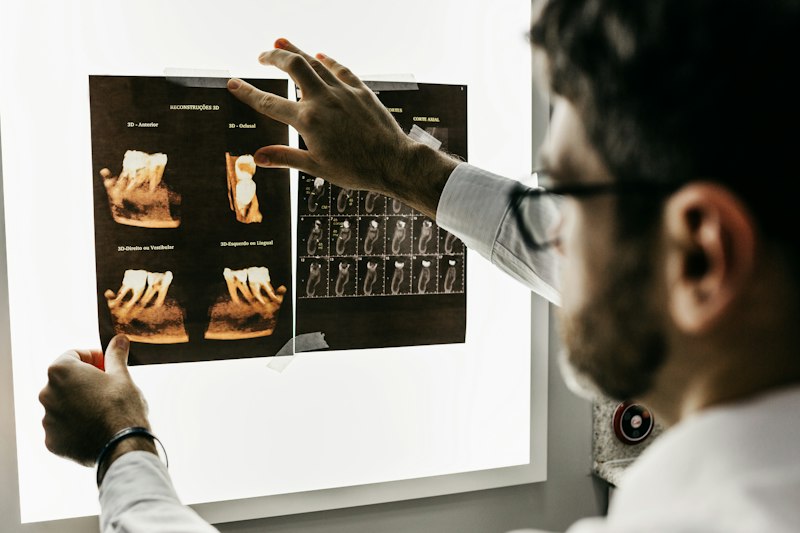
At Larson Family Orthodontics, the entire treatment process starts differently. Before a single bracket is placed, Dr. Larson uses a digital intraoral scanner to create a precise 3D model of your teeth. This isn't an impression tray filled with goop — it's a comfortable, accurate scan that takes minutes and produces a complete digital map of your mouth.
That digital model becomes the foundation for everything that follows.
Custom brackets, not off-the-shelf hardware. Using LightForce technology, each bracket is 3D-printed to fit the exact contours of your specific tooth. Not a generic size S, M, or L — your actual tooth. This precision means the bracket is doing more work from day one, and doing it more efficiently.
A treatment plan designed on a computer first. Dr. Larson maps the entire tooth movement sequence digitally before treatment begins. You can see where your teeth are going before the first wire is placed. This isn't just reassuring — it means every appointment has a clear, pre-planned purpose rather than being a reactive adjustment.
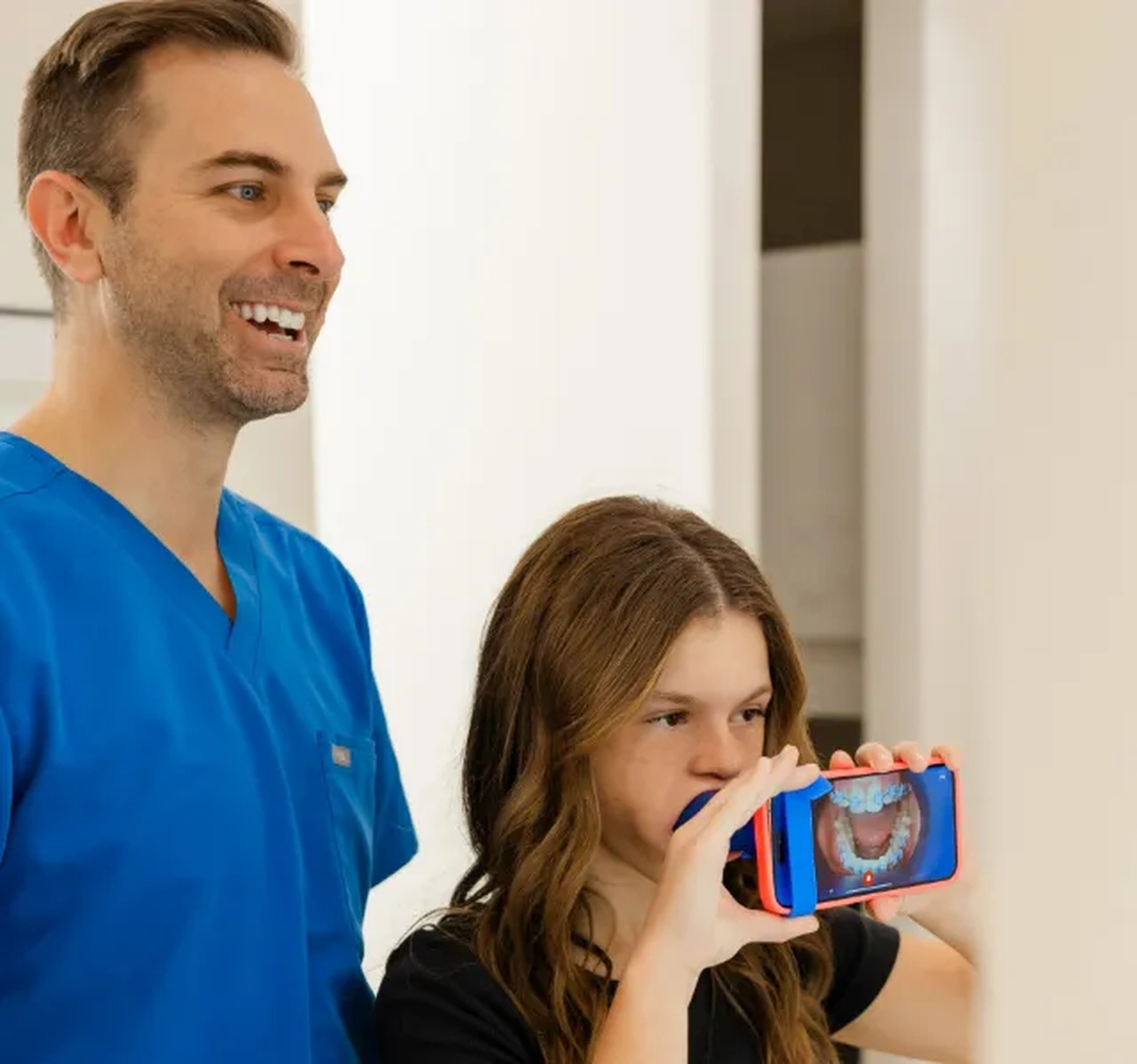
Remote monitoring between visits. Patients use the Grin app to take photos of their teeth at home every few weeks. Dr. Larson reviews those photos remotely and can assess progress without requiring an in-office visit. If everything is on track, the next appointment stays on schedule. If something needs attention, the team reaches out proactively.
The Numbers Behind the Difference
The shift from traditional to digital orthodontics isn't just a convenience story — it's backed by clinical data. Studies on custom bracket systems like LightForce have shown treatment times up to 45% faster than traditional braces. Patients who use remote monitoring apps like Grin average 41% fewer in-office appointments over the course of their treatment.
Think about what that means practically. A treatment that might have required 24 appointments with traditional braces could require as few as 14 with a digital workflow. For a family with two working parents and a kid in middle school, that's 10 fewer mornings of logistics, 10 fewer early dismissals, 10 fewer times you have to figure out who's picking up whom.
Why This Matters for Kids Especially
Children and teenagers are the most common orthodontic patients — and they're also the ones who bear the social and academic cost of frequent appointments. Missing class for braces is normalized, but it doesn't have to be.
With digital orthodontics, the monitoring happens at home. The patient takes their own photos on their phone. The orthodontist reviews them on their end. The in-office visits that do happen are purposeful and efficient — not routine check-ins that could have been skipped.
There's also a psychological dimension worth noting. When kids can see their treatment plan digitally — when they can literally watch an animation of how their teeth will move — they become more invested in the process. Compliance improves. They wear their elastics. They take their monitoring photos. The treatment moves faster because the patient is engaged.
The Question Worth Asking at Every Consultation
When you're evaluating orthodontists for your child, most of the conversation will be about treatment options, timelines, and cost. Those are all important. But there's one question that rarely gets asked, and it's the one that will most affect your daily life over the next 12 to 18 months:
*How many appointments will this actually require?*
A traditional orthodontist might say "every 4 to 6 weeks." A digital orthodontist can give you a specific number — and back it up with a remote monitoring protocol that keeps that number low.
At Larson Family Orthodontics, we believe your time is as valuable as your smile. The technology exists to give you both. The only question is whether your orthodontist is using it.
What to Expect at a Digital Orthodontics Consultation
If you've never been to a digital orthodontics practice, the first visit might surprise you. There are no impression trays. The scan is fast and comfortable. You'll see a 3D model of your teeth on a screen within minutes. Dr. Larson will walk you through what he sees, what the treatment plan looks like, and how the monitoring process works.
You'll leave with a clear picture of your timeline, your appointment schedule, and what the finished result will look like — before you've committed to anything.
That's what modern orthodontics looks like. And once you've seen it, it's hard to go back to the old way.